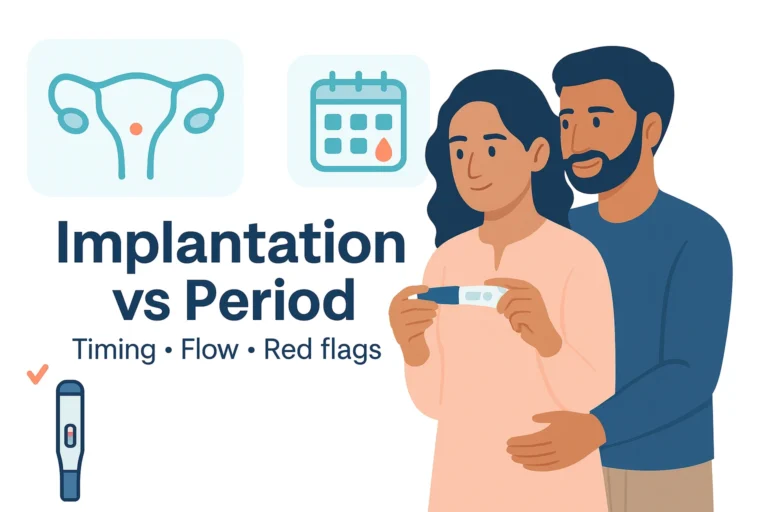


Starting IVF can feel like studying for the most important exam of your life—only the syllabus looks endless. The good news: while some factors (like age or diagnosis) are beyond your control, many day-to-day choices can meaningfully support your chances. This guide brings together practical steps you can take before, during, and after an IVF cycle, grounded in reputable medical guidance. It’s written for Indian readers, uses metric units, and keeps the tone real and empathetic—because this journey is as emotional as it is medical.
Educational content only. This article isn’t a substitute for personalised medical advice. Always follow your clinic’s instructions.
What actually drives IVF success
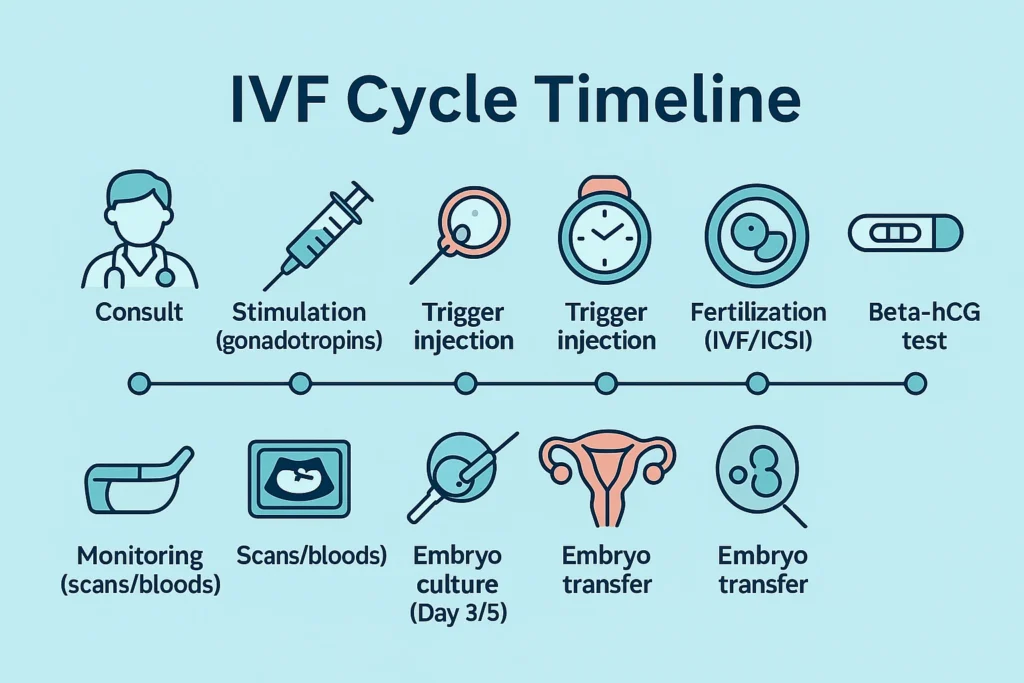
Several variables influence IVF outcomes:
- Age & ovarian reserve: Egg quality and quantity decline with age; this is the single biggest driver of outcome. Public registries show live-birth rates fall with increasing age across clinics. CDC
- Sperm quality: Count, motility, morphology, and DNA integrity matter. Lifestyle and health conditions affect these. CDC
- Uterine factors & endometrium: Cavity shape, fibroids/polyps, and lining quality influence implantation. For example, guidelines note pregnancy is unlikely if the endometrium is extremely thin. NICE
- Underlying diagnosis & protocol quality: Tubal disease, endometriosis, PCOS, male-factor infertility, and protocol choice all play roles.
- Clinic and lab standards: A well-run, transparent clinic with a robust lab and good culture conditions matters.
Tip: If you’re in the US, the CDC ART success rates tool shows audited, age-stratified outcomes by clinic. In India, ask clinics for audited, age-specific success data and whether they comply with ICMR norms. CDCSquarespace
Optimise what you can control before you start
1) Reach a sustainable, healthy weight
Excess weight is linked with lower IVF success and higher pregnancy risks (gestational diabetes, hypertension), whereas gradual, clinician-supervised weight optimisation can help. Professional bodies advise weight counselling before conception. RCOG
How to act on it (practically):
- Prioritise a minimally processed, plant-forward plate: plenty of vegetables/fruit, pulses, whole grains, nuts/seeds; lean proteins; unsaturated fats.
- Focus on slow, realistic changes; avoid crash diets that can harm hormonal balance. RCOG
- If PCOS is part of your story, individualised nutrition and exercise plans help—see our guide on PCOS and fertility.
2) Choose a fertility-friendly dietary pattern
Emerging research suggests that healthy patterns like the Mediterranean-style diet are associated with better ART outcomes for some people, though evidence is not uniform and causation isn’t proved. Consider this as a gentle nudge—not a magic bullet. PMCBioMed Central
Simple swaps: add an extra katori of salad/veg daily, switch refined grains to whole grains most days, use mustard/groundnut/olive oil in moderation, and include fish 1–2 times a week if non-vegetarian (or plant omega-3s if vegetarian).
3) Quit smoking, go easy on alcohol, and keep caffeine moderate
- Smoking damages eggs and sperm, reduces ART success, and raises obstetric risks. Quitting improves reproductive outcomes. CDC
- Alcohol: Limit while trying to conceive and avoid in pregnancy; heavy use impairs fertility. Mayo ClinicASRM
- Caffeine: Moderate intake (≤~200 mg/day) is considered acceptable in pregnancy; keep IVF-era intake modest. (Remember caffeine also hides in tea, cola, energy drinks.) ACOG
4) Supplements: be strategic, not scatter-gun
- Folic acid before pregnancy is standard preconception care. Your clinician will advise the right product and timing for you.
- Vitamin D: Studies are mixed; deficiency is common and may be linked to poorer outcomes in some groups, but routine supplementation for IVF success alone isn’t settled. Test and treat deficiency per your doctor. PMC
- Male antioxidants (e.g., CoQ10, vitamins C/E, zinc, selenium): Can improve semen parameters; evidence for increased live birth/clinical pregnancy is mixed and low–moderate certainty—discuss with your clinician before starting.
Avoid self-prescribing. Supplements can interact with medications and are not a replacement for medical treatment.
5) Sleep, stress care, and counselling
Stress doesn’t “block” implantation, but it does affect quality of life and relationships—counselling/support groups are specifically recommended in guidelines. Mind-body practices (breathwork, yoga nidra, journalling) can steady the process. NICE
Pick the right clinic and team
A clinic that communicates clearly and tracks outcomes transparently can make your journey smoother.
What to ask:
- Age-stratified live-birth rates per transfer, not just “positive pregnancy tests”.
- Single embryo transfer (SET) policy for suitable patients to reduce twin risks; multiple pregnancy raises complications for mother and babies. HFEAJAMA Network
- Lab standards: air quality, validated incubators, embryo culture to day-5 where appropriate, ultrasound-guided embryo transfer as routine. NICE
- Add-ons transparency: Do they follow an evidence rating system (e.g., HFEA traffic-light) when suggesting extras like PGT-A or ERA? HFEA
- Regulatory compliance: In India, clinics should adhere to ICMR/ART standards. Squarespace
For a primer on how success rates are reported, see our page on IVF success rates.
During stimulation: day-to-day success habits
Nail the details that matter
- Medication timing: Set redundant alarms. Trigger injections are time-critical—errors can cancel retrieval.
- Hydration & gentle movement: Helps with bloating and comfort.
- OHSS awareness: Sudden abdominal distention, severe pain, rapid weight gain, breathlessness, or reduced urine output are red flags—contact your clinic urgently. ASRM
Can I exercise during IVF?
Good news: recent clinical research suggests moderate exercise during stimulation lowers stress and doesn’t worsen outcomes, but avoid high-impact movements when ovaries are enlarged (to minimise torsion risk). Stick to walking, gentle cycling, light strength, or prenatal-style yoga; skip HIIT, jumping, heavy lifting, or deep twists until after your clinic clears you. FertSterTMedscape
Sex and intimacy
Some clinics advise avoiding intercourse late in stimulation (ovaries are enlarged) to reduce torsion risk and discomfort; follow your team’s guidance.
Semen sample: small tweaks, fewer headaches
If providing a fresh sample:
- Follow the abstinence window your lab specifies.
- Avoid non–sperm-safe lubricants.
- Keep the sample close to body temperature and deliver promptly per instructions.
Egg retrieval & lab days: set yourself up
Embryo transfer day: small details with real impact
- Comfortably full bladder + ultrasound-guided transfer helps visualise catheter placement; guidelines recommend ultrasound guidance to improve outcomes. NICE
- Bed rest is not beneficial. Evidence shows mobilising soon after transfer does not reduce success. Move normally unless your clinician advises otherwise. NICECochrane LibraryPubMed
- Single embryo transfer (SET) if your doctor recommends it: comparable success over multiple cycles with markedly lower risks than transferring two embryos at once. HFEAJAMA Network
The two-week wait: protect your sanity (and your cycle)
- Continue all medicines exactly as prescribed.
- Live gently, not fearfully: Normal daily activity is fine; avoid strenuous workouts and heavy lifting until cleared.
- Hold the googling: Bleeding/spotting can occur and doesn’t always predict outcome.
- When to call your clinic (red flags): severe abdominal pain, fever ≥38°C, heavy bleeding (soaking >1 pad/hour), foul-smelling discharge, shortness of breath, chest pain, or rapid weight gain. ASRM
Advanced options (and where evidence is mixed)
Preimplantation genetic testing for aneuploidy (PGT-A)
PGT-A screens embryos for chromosome number. It may reduce transfers of aneuploid embryos and lower miscarriage risk in selected cases, but does not clearly increase live-birth rates for most patients, and benefits vary by age and embryo cohort. The UK regulator currently rates PGT-A as having insufficient evidence for improving chances of a baby for most patients.
Endometrial receptivity testing (ERA)
Despite the hype, ERA is rated “red” (may reduce effectiveness for most) for improving the chance of having a baby. It’s not recommended routinely. HFEA
Bottom line on “add-ons”: Ask your clinic to cite high-quality evidence (randomised trials, live-birth outcomes) and costs. The HFEA’s traffic-light system is a helpful lens for judging add-ons. HFEA
Male-factor: level up your side of the equation
- Stop smoking; limit alcohol; maintain a healthy weight; exercise moderately; prioritise sleep.
- Heat and toxins: Minimise hot tubs/saunas, tight synthetic underwear, and solvent/pesticide exposures where possible.
- Supplements: Antioxidants can improve semen parameters; impact on live birth is uncertain—discuss targeted choices with your clinician.
- Medical checks: A urologist-andrologist can assess varicocele, hormonal issues, or infections that might be treatable.
A realistic timeline & mindset
- Many couples need more than one transfer to get to a live birth. Plan emotionally and financially for a course of treatment rather than a “one-shot” attempt.
- Understanding your odds (by age/diagnosis) reduces anxiety. Tools that show national/clinic-specific rates can help you benchmark, while keeping expectations grounded. CDC
- Build your support net: counselling, support circles, and trusted friends/family. NICE
Quick, practical checklist (pin this!)
6–12 weeks before stimulation
- Medical optimisation (thyroid, diabetes, BP); dental check; update vaccines per your doctor.
- Start sustainable nutrition and movement changes; limit alcohol; stop smoking.
- Discuss supplements with your clinician (no self-prescribing).
- Shortlist clinics; ask the evidence-based questions above; review IVF success rates.
During stimulation
- Set alarms for meds; keep a simple log.
- Walk, stretch, or do low-impact exercise; avoid high-impact/HIIT and heavy lifting. FertSterT
- Learn OHSS red flags and call early if worried. ASRM
Transfer day
- Arrive relaxed with a comfortably full bladder.
- Ultrasound-guided transfer; no post-transfer bed rest required. NICECochrane Library
- Discuss SET if appropriate. HFEA
Two-week wait
- Take medications exactly as prescribed.
- Normal life is okay; gentle movement preferred.
- Call your clinic for any red-flag symptoms (see above). ASRM
Useful, trustworthy read
- Lifestyle & infertility: The WHO’s infertility factsheet summarises lifestyle risks and broader context. World Health Organization
- Bed rest after transfer: NICE guidance and a Cochrane review show no benefit from bed rest. NICECochrane Library
- Caffeine in pregnancy: ACOG’s take on moderate caffeine. ACOG
- Clinic outcomes: CDC ART national summary and clinic-level explorer (US). CDC+1
- Add-ons: HFEA’s patient-friendly traffic-light explainer. HFEA
The IVFix takes
IVF is medicine plus micro-habits. You can’t biohack your age or guarantee an outcome—but you can stack the odds: choose a transparent clinic, keep lifestyle steady and supportive, move your body gently, ask for evidence on add-ons, follow meds to the letter, and know when to call for help. Most of all, be kind to yourself. This is hard, and you’re doing beautifully.